
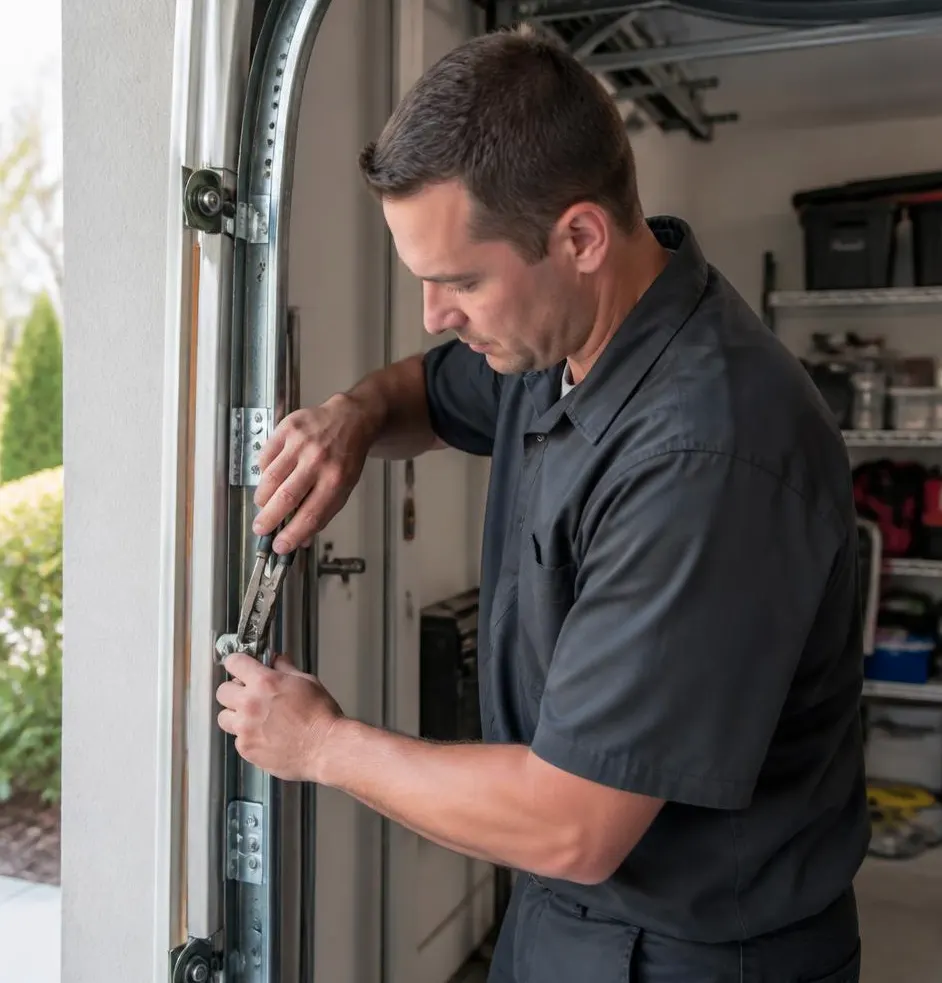
Short answer: a wound garage door spring holds enough stored energy to snap bones, shatter teeth, and blind an eye in a fraction of a second, and there is no safe way to "ease" that tension off without the right bars, clamps, and winding cone technique. Every year, emergency rooms treat homeowners for crushed fingers, facial fractures, and deep lacerations from spring jobs that looked simple on a video. It's one of the few home repairs where the gap between "looks easy" and "is easy" can put you in surgery.
What a Garage Door Spring Actually Does
Most residential garage doors use one of two spring systems: torsion springs mounted on a bar above the door, or extension springs stretched along the horizontal tracks. Both store mechanical energy by being wound or stretched far beyond their resting length. That stored energy is what lifts a door weighing anywhere from 130 to over 400 pounds, depending on size and material.
When a spring breaks, or when someone tries to loosen or remove a wound spring without controlling it, that energy releases instantly. There's no gradual "letting go." A torsion spring under full tension can spin a winding bar out of an untrained hand hard enough to break fingers or crack a skull. An extension spring under load can launch itself, or a piece of hardware attached to it, across a garage at speeds that put holes in drywall.
How the Injuries Actually Happen
These aren't rare freak accidents. The same handful of mistakes show up again and again:
- Using the wrong winding bars (or screwdrivers). Torsion springs require solid steel winding bars sized exactly to the winding cone. Screwdrivers slip, bend, or shear off mid-turn, releasing the spring with no warning.
- Working on a door that isn't secured. If the door itself isn't clamped or blocked in place, releasing spring tension can send it crashing down the tracks while hands or tools are still near it.
- Underestimating a "dead" spring. A spring that looks broken may still hold residual tension in the coil. People assume it's safe because the door won't move, then get caught off guard when they start disassembling it.
- Not knowing which direction to wind. Winding a torsion spring the wrong direction, even by a quarter turn in testing, can cause it to bind and then release violently.
- Standing in the wrong place. The space directly in line with the winding bar or the spring itself is where almost every serious injury happens. Experienced technicians train themselves to stay out of that line even when everything is going correctly.
Add in the fact that most homeowners do this job once, with borrowed tools, rushing before a storm or before leaving for work, and it's easy to see why the injury numbers hold steady year after year.
Why This Part of Florida Adds Extra Risk
Humidity and salt air along the Bay County coast accelerate rust on spring coils, torsion bars, and end bearing plates. A rusted spring doesn't fail cleanly, it can corrode unevenly, weakening one section of coil while the rest stays tight. That uneven wear makes the spring more likely to snap suddenly rather than wear down gradually, and it's much harder for an untrained eye to judge how much tension is actually left in a corroded spring.
Homes built or retrofitted to meet wind-load requirements for hurricane season often use heavier-gauge doors and correspondingly heavier springs to lift them. That means more stored energy per spring than you'd find on a lighter door, which raises the stakes if something goes wrong mid-repair. Combine that with afternoon humidity swelling wood-trimmed doors and tightening tracks, and a spring job that might be manageable in a dry climate becomes riskier here.
Safe Things You Can Do Without Touching the Spring
You don't have to just wait and hope. There's plenty you can safely check and do:
- Look, don't touch. A visible gap in a torsion spring's coil, or a stretched, disconnected extension spring, confirms a break without you needing to get near it.
- Disconnect the opener manually. Pull the red release cord so the opener doesn't keep straining against a broken spring, which can damage the motor and gears.
- Leave the door closed and secured. A door with a broken spring can fall unexpectedly if the tracks or cables shift. Keep people and vehicles clear until it's repaired.
- Check the date on the spring. Many springs are stamped with a manufacture date or cycle rating. If yours is old or near its rated cycle count, that's useful information to share with a technician.
- Note which spring type you have. Torsion (above the door, on a bar) or extension (along the side tracks) changes the repair approach and the tools required.
None of this requires touching a wound spring, and all of it helps a technician move faster once they arrive.
When to Call Youngstown Overhead Door Co
If you've spotted a broken coil, heard a loud bang from the garage followed by a door that won't budge, or noticed visible rust pitting on your springs after a humid summer, it's time to call. Our Garage Door Spring Repair service includes properly discharging and replacing torsion or extension springs with correctly rated hardware for your door's weight and wind-load class, not a generic off-the-shelf substitute. While we're there, we'll also check cables and rollers, since a failed spring often puts extra strain on both, and recommend our Cable & Roller Replacement service if wear shows up.
If your garage door has a broken or failing spring, don't risk it. Call Youngstown Overhead Door Co for fast, safe spring repair anywhere in Youngstown, FL and the surrounding Bay County area.